
Navigating fastener selection requires precise nut and bolt size charts‚ often available as a PDF. These charts detail crucial dimensions for proper assembly.
What is a Nut and Bolt Size Chart?
A nut and bolt size chart‚ frequently found in PDF format‚ is a comprehensive reference tool detailing the standardized dimensions of fasteners. These charts meticulously list specifications like diameter‚ thread pitch‚ length‚ and width across flats – essential data for ensuring compatibility and proper functionality. They cover both metric and imperial (inch) sizes‚ offering a complete overview of available fasteners.
These charts aren’t merely lists; they’re crucial for engineers‚ mechanics‚ and DIY enthusiasts alike. They guarantee that nuts and bolts will fit together correctly‚ preventing issues during assembly and ensuring structural integrity. A well-maintained PDF chart is a cornerstone of any successful project involving threaded fasteners.
Importance of Using a Size Chart
Utilizing a nut and bolt size chart‚ often accessed as a convenient PDF‚ is paramount for successful and safe fastening. Incorrect sizing can lead to stripped threads‚ weakened joints‚ and potential structural failure. A chart ensures precise matching of bolt diameter and thread pitch with the corresponding nut‚ guaranteeing a secure connection.
Furthermore‚ referencing a chart avoids costly errors and wasted time. Selecting the wrong fastener can halt a project and necessitate returns or replacements. A readily available PDF chart‚ especially one emphasizing accurate printing to actual size‚ minimizes these risks. Proper fastener selection‚ guided by a size chart‚ is fundamental to reliable construction and maintenance;

Understanding Bolt Dimensions
A nut and bolt size chart PDF details key bolt measurements: diameter‚ thread pitch‚ and length‚ alongside the critical width across flats for wrenching.
Bolt Diameter and Thread Pitch
Understanding bolt diameter and thread pitch is fundamental when referencing a nut and bolt size chart PDF. Diameter defines the bolt’s body size‚ typically measured in millimeters (metric) or inches (imperial). Thread pitch‚ expressed as threads per inch or millimeters‚ dictates how tightly the nut engages with the bolt.
A PDF chart will clearly list these values for each bolt size. Correct matching of diameter and pitch is vital for secure fastening; mismatches can lead to stripped threads or weakened joints. The chart also specifies thread length‚ often calculated as twice the diameter plus a small allowance for standard bolts‚ ensuring sufficient engagement with the nut. Accurate interpretation of these dimensions from the PDF is crucial for successful projects.
Bolt Length Measurement
Determining correct bolt length is critical‚ and a detailed nut and bolt size chart PDF is invaluable. Bolt length is typically measured from under the bolt head to the tip of the threads. When using a PDF chart‚ remember that thread length is often specified separately‚ and impacts the overall effective length.
For standard bolts (excluding lag screws)‚ the thread length formula often involves twice the diameter plus a small addition. Ensure sufficient length to fully engage the nut without bottoming out‚ but avoid excessive length which weakens the joint. A PDF will often show these dimensions clearly. Accurate measurement‚ guided by the chart‚ prevents assembly issues and ensures structural integrity.
Width Across Flats (WAF)
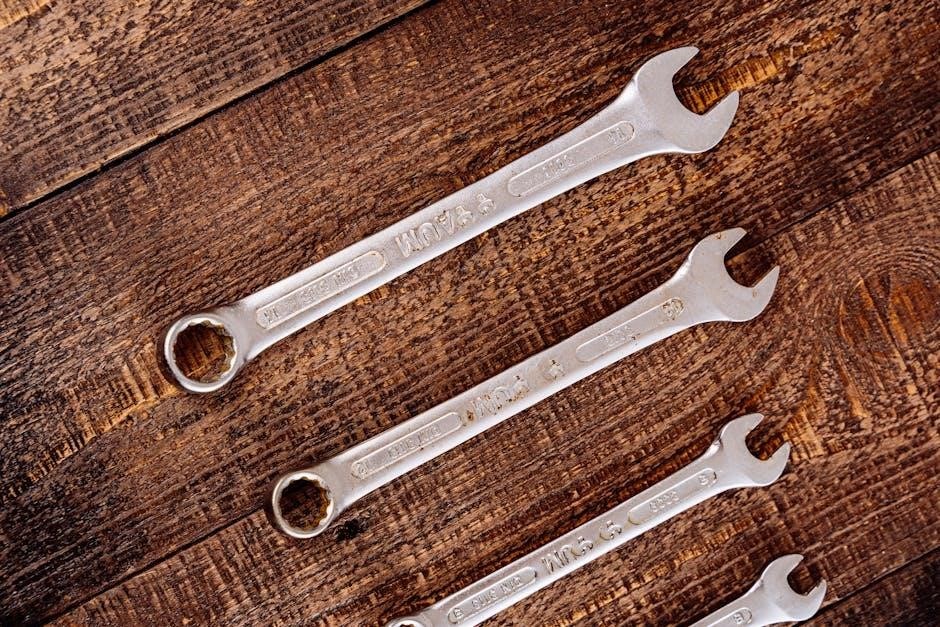
The Width Across Flats (WAF)‚ a key dimension found in any comprehensive nut and bolt size chart PDF‚ represents the distance between opposite sides of the bolt head or nut. This measurement is crucial for selecting the correct wrench or socket size; A PDF chart will typically list WAF in millimeters or inches‚ corresponding to the bolt or nut size.
Accurate WAF data‚ readily available in a PDF format‚ prevents damage to fasteners and tools during installation or removal. Variations exist‚ so always consult a reliable chart. Understanding WAF ensures efficient and safe assembly‚ avoiding rounded corners or stripped threads. Proper tool fit‚ guided by the PDF‚ is paramount for successful fastening.

Understanding Nut Dimensions
A detailed nut and bolt size chart PDF outlines critical nut measurements like height‚ width‚ and thread size for compatible fastening solutions.
Nut Height and Width
Accurate nut height and width are paramount for secure assemblies‚ and a comprehensive nut and bolt size chart PDF provides these vital specifications. These dimensions directly influence wrench clearance and overall joint integrity. Charts typically list nut height as ‘h’ and width across flats as ‘S’‚ both crucial for preventing binding or improper tightening.
Variations exist based on nut type (hex‚ square‚ flange) and material. A PDF chart will delineate these differences‚ ensuring correct component selection. Understanding these dimensions‚ alongside thread size‚ guarantees a robust and reliable mechanical connection. Always refer to a trusted size chart to avoid compatibility issues and maintain structural safety.
Nut Thread Size
The nut’s thread size is fundamentally critical for compatibility with its corresponding bolt‚ and a detailed nut and bolt size chart PDF clearly outlines these specifications. Thread size is typically denoted using a number (e.g.‚ M8‚ 1/4″) and threads per inch (TPI) or pitch (mm). A correct match ensures proper engagement and load distribution.
A PDF chart will differentiate between metric (M) and imperial (inch) threads‚ preventing mismatched pairings. Understanding thread pitch or TPI is essential for calculating clamping force and preventing stripping. Always verify the thread size on both the nut and bolt using a reliable size chart before assembly to guarantee a secure and functional connection.
Wrench Opening Size for Nuts
A comprehensive nut and bolt size chart PDF invariably includes the wrench opening size for each nut dimension. This measurement‚ often labeled “Width Across Flats” (WAF)‚ dictates the correct wrench or socket size needed for tightening or loosening. Accurate WAF data prevents damage to the nut’s corners and ensures efficient application of torque.
These charts typically present WAF in millimeters or inches‚ corresponding to the nut’s overall size. Utilizing the correct wrench size‚ as indicated in the PDF‚ is paramount for safe and effective fastener installation. Incorrect wrenching can lead to rounded nuts‚ compromised clamping force‚ and potential failure of the assembly. Always double-check the chart before proceeding.

Metric Nut and Bolt Size Chart
A nut and bolt size chart PDF details common metric sizes‚ like M2 to M24‚ providing essential dimensions for bolts‚ nuts‚ and washers.
Common Metric Sizes (M2 ─ M24)
Metric fasteners are globally standardized‚ with sizes designated by ‘M’ followed by the diameter in millimeters. A comprehensive nut and bolt size chart PDF will typically list common sizes ranging from the diminutive M2‚ often used in electronics‚ up to the robust M24‚ frequently found in heavy machinery and construction.
These charts detail not only the diameter but also critical specifications like thread pitch‚ wrench sizes‚ and approximate weights. Popular sizes include M3‚ M4‚ M5‚ M6‚ M8‚ M10‚ M12‚ M16‚ and M20. Understanding these common sizes is fundamental for any project involving metric hardware‚ ensuring compatibility and structural integrity. Accessing a reliable PDF version allows for quick reference and accurate selection.
Metric Bolt Dimensions Table (mm)
A detailed nut and bolt size chart PDF will include a metric bolt dimensions table‚ crucial for precise engineering and assembly. This table lists key measurements in millimeters‚ including diameter (M size)‚ thread pitch (distance between threads)‚ and width across flats (WAF) for wrench fitting.
Typical columns showcase dimensions for various M sizes (e.g.‚ M6‚ M8‚ M10). The table also often specifies shank length and head height. Accurate dimensions are vital to prevent stripping threads or improper clamping force. Utilizing a downloadable PDF ensures a readily available and consistently accurate reference point for all metric fastener needs‚ streamlining project execution.

Imperial (Inch) Nut and Bolt Size Chart
An imperial nut and bolt size chart PDF details dimensions in inches‚ covering common sizes like 1/4″‚ 3/8″‚ and 1/2″ for various applications.
Common Imperial Sizes (1/4″ ─ 1″)
Frequently encountered imperial fastener sizes range from 1/4″ to 1″ in diameter. A comprehensive nut and bolt size chart PDF will list these‚ detailing thread counts per inch (UNC‚ UNF) and corresponding wrench sizes. Common bolts include those with lengths specified as 1/2″‚ 1″‚ 2″‚ and longer. Nuts are matched to bolt diameters‚ ensuring a secure connection.
Understanding these sizes is critical for repairs‚ construction‚ and manufacturing. The PDF charts often include information on standard thread pitches and material grades. Accurate identification prevents mismatched components and potential failures. Utilizing a reliable chart ensures compatibility and structural integrity in any assembly requiring imperial fasteners.
Imperial Bolt Dimensions Table (inches)
A detailed nut and bolt size chart PDF will present an Imperial bolt dimensions table‚ listing diameter‚ thread pitch (TPI ─ Threads Per Inch)‚ and length. For example‚ a 1/4″-20 bolt has a 1/4″ diameter and 20 threads per inch. Common sizes like 5/16″‚ 3/8″‚ 1/2″‚ 3/4″‚ and 1″ are included‚ with varying thread pitches.
Width across flats (WAF) is also crucial for wrench selection‚ typically found within the PDF. Bolt length is measured from under the head to the tip. These tables are essential for accurate replacements and ensuring proper fit. Always verify dimensions before purchasing‚ referencing a reliable chart for precision.

Bolt Strength and Grade Markings
A comprehensive nut and bolt size chart PDF includes bolt grade markings (e.g.‚ 8.8‚ 10.9) indicating tensile strength and material properties.
Understanding Bolt Grade Markings (e.g.‚ 8.8‚ 10.9)
Bolt grade markings‚ prominently featured within a detailed nut and bolt size chart PDF‚ are crucial for determining a fastener’s strength. These markings‚ like ‘8.8’ or ‘10.9’‚ aren’t arbitrary; they represent the tensile strength and yield strength of the steel. The first number indicates the ultimate tensile strength in MPa divided by 100‚ while the second represents the yield strength as a percentage of the tensile strength.
Higher numbers signify stronger bolts capable of withstanding greater loads. Selecting the correct grade‚ guided by the PDF chart‚ is paramount for ensuring structural integrity and preventing failures. Ignoring these markings can lead to catastrophic consequences‚ especially in critical applications. Always consult the chart for appropriate grade selection based on your project’s requirements.
Impact of Grade on Torque Specifications
A comprehensive nut and bolt size chart PDF doesn’t just list dimensions; it implicitly links bolt grade to appropriate torque specifications. Higher grade bolts‚ possessing greater tensile strength‚ can withstand significantly more torque. Applying insufficient torque risks loosening‚ while excessive torque can lead to bolt failure or damage to connected components.
Therefore‚ referencing the chart alongside torque tables is essential. The PDF will often indicate recommended torque values based on bolt diameter and grade. Ignoring grade when determining torque is a critical error. Always prioritize the manufacturer’s recommendations found within the chart to ensure a secure and reliable fastening solution‚ preventing costly rework or safety hazards.

Weight and Count Charts for Bolts and Nuts
A detailed nut and bolt size chart PDF includes weight charts‚ aiding in project cost estimation and material quantity calculations for efficient procurement.
MS Hex Full Thread Bolt Weight Chart
A comprehensive nut and bolt size chart PDF frequently incorporates an MS Hex Full Thread Bolt Weight Chart‚ crucial for accurate material calculations. This chart details the approximate weight of each bolt based on its metric size – from M2 up to M18‚ as exemplified in available data.
Weights are typically listed in kilograms or grams per piece‚ allowing for precise estimations of total fastener weight within a project. The chart often includes corresponding nut weights for a complete assembly calculation. Utilizing these charts minimizes material waste and ensures accurate project costing. Remember that these are approximate values‚ and actual weights may vary slightly based on manufacturing tolerances and material composition. Always consult the specific manufacturer’s data sheet for the most precise information.
Calculating Approximate Weight
While a detailed nut and bolt size chart PDF provides pre-calculated weights‚ understanding the approximation method is valuable. Bolt weight is primarily determined by its material density and volume. Volume is calculated using the bolt’s diameter and length‚ considering it’s largely cylindrical.
For quick estimations‚ a simplified formula can be applied‚ though accuracy diminishes with complex bolt head designs. Remember to account for thread volume‚ which adds to the overall weight. A PDF chart offers convenience‚ but knowing the underlying principles allows for estimations when specific sizes aren’t listed. Always factor in the weight of accompanying nuts and washers for a complete assembly weight calculation.

Printing and Using PDF Charts Correctly
Accurate measurements rely on correctly printed nut and bolt size chart PDF documents; ensure “Actual Size” and no scaling are selected during printing.
Ensuring Actual Size Printing (No Scaling)
When utilizing a nut and bolt size chart PDF‚ achieving accurate measurements hinges on proper printing settings. It’s critically important to disable any scaling options within your PDF viewer or printer settings. Selecting “Actual Size” or “100%” guarantees the printed chart reflects the intended dimensions. Failure to do so will result in inaccurate readings‚ potentially leading to incorrect fastener selection and compromised assemblies.
Always verify the printed ruler‚ often included on these charts‚ matches a standard ruler. This quick check confirms the PDF was printed to scale. Incorrect scaling can significantly alter measurements‚ rendering the chart useless for precise work. Prioritize this step for reliable fastener identification and project success.
Verifying Chart Accuracy with a Ruler
After printing a nut and bolt size chart PDF‚ immediate verification is essential. Most charts include a small ruler alongside the dimension tables. Carefully measure this printed ruler with a calibrated‚ physical ruler. Any discrepancy indicates the PDF was not printed to its actual size‚ potentially skewing all measurements.
Even slight variations can lead to significant errors in fastener selection. If the printed ruler is inaccurate‚ revisit your printer settings and ensure scaling is disabled. A reliable chart is paramount for successful projects‚ preventing mismatched components and ensuring structural integrity. Double-checking guarantees precision and avoids costly mistakes.
Historical Standards and Changes
Early nut and bolt size chart standards‚ like ISO 4014‚ evolved over time; dimensions for M10 and M12 fasteners experienced notable revisions.
Evolution of Metric Fastener Standards (ISO 4014)
The ISO 4014 standard governs metric hexagon head bolts – a cornerstone of many nut and bolt size chart PDF resources. Initially established to promote international uniformity‚ it has undergone several revisions to address evolving engineering needs and manufacturing capabilities. Early versions focused on basic dimensional requirements‚ ensuring interchangeability across different regions.
Subsequent updates incorporated refinements to material specifications‚ mechanical properties‚ and tolerance classes. These changes aimed to enhance fastener performance and reliability. The standard’s evolution reflects advancements in metallurgy and precision machining. Modern iterations of ISO 4014 provide comprehensive guidance on everything from thread types to surface treatments‚ making PDF charts based on it incredibly detailed and useful for engineers and technicians.
Changes in Dimensions Over Time (M10 and M12)
Analyzing historical nut and bolt size chart PDF documents reveals subtle yet significant dimensional shifts‚ particularly with M10 and M12 fasteners. The 1967 version of the relevant standard specified 17mm and 19mm widths across flats for these sizes‚ respectively. However‚ later revisions saw these dimensions standardized to more common values.
These alterations weren’t arbitrary; they stemmed from a desire to optimize wrenching ergonomics and improve manufacturing consistency. Consequently‚ older fasteners might exhibit slight discrepancies when compared to modern equivalents. Understanding these historical changes is crucial when working with legacy equipment or restoring vintage machinery‚ and referencing detailed PDF charts is essential for accurate identification and replacement.